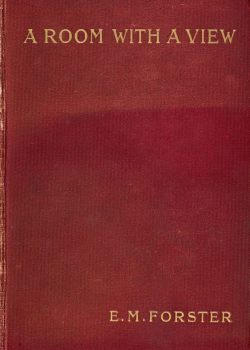
A Room With A View
A Room With A View is a classic novel by English author E.M. Forster, first published in 1908. It tells the story of Lucy Honeychurch, a young Englishwoman from a respectable but rather repressed Edwardian middle-class family, who embarks on a tour of Italy with her older cousin and chaperone, Charlotte Bartlett. While in Florence, their lives intersect with a vibrant, unconventional father-and-son pair, Mr. Emerson and George Emerson, whose free-spirited nature challenges Lucy’s carefully constructed worldview. The novel explores themes of societal constraints, personal freedom, class differences, and the pursuit of truth and passion over stifling social decorum.
About This Ebook
The narrative of “A Room With A View” is essentially a coming-of-age story set against the backdrop of changing social attitudes in early 20th-century England.
Setting the Scene in Florence: The novel opens in Florence, Italy, where Lucy and Charlotte find themselves in a hotel that doesn’t offer the “room with a view” they were promised. Mr. Emerson, a kind but blunt man, and his broodingly intense son, George, offer to swap rooms with them, leading to Charlotte’s discomfort and Lucy’s quiet fascination. This initial encounter immediately highlights the stark contrast between the Emersons’ unpretentious sincerity and the rigid social codes of the Honeychurch-Bartlett circle.
Lucy is initially drawn to George but is quickly pulled back by Charlotte and other well-meaning but conservative English acquaintances, like the Reverend Arthur Beebe and the spinster novelist Miss Lavish. A pivotal moment occurs during an outing in the Tuscan countryside when George impulsively kisses Lucy. This act, deeply shocking to Lucy’s Edwardian sensibilities, throws her into a state of confusion and burgeoning self-awareness. Charlotte, witnessing the kiss, quickly orchestrates their departure from Italy, convinced that George is an unsuitable match.
Return to England and the Engagement: Back in rural Surrey, England, Lucy attempts to regain control of her life and emotions by becoming engaged to the “suitable” Cecil Vyse. Cecil is an intelligent, cultured, and aesthetically refined man, but also possessive, arrogant, and somewhat emotionally detached. He views Lucy more as an object to be admired and moulded than a person to be loved. Lucy tries to convince herself that this engagement aligns with her logical and rational side, pushing away the chaotic feelings stirred by George.
However, fate intervenes. Mr. Emerson and George unexpectedly move into the same village as the Honeychurches, having rented a cottage through Cecil himself, who ironically believes the Emersons’ unconventionality will amuse Lucy. George’s presence forces Lucy to confront the suppressed passion and authenticity she felt in Italy. The polite society of England, with its gossip and unspoken rules, proves stifling for Lucy as she struggles to reconcile her true feelings with what is expected of her.
The Climax and Resolution: The climax of the novel involves Lucy’s growing realization that she cannot marry Cecil, as their relationship lacks genuine connection and passion. She breaks off the engagement, causing scandal and confusion among her family and friends. Through honest (and sometimes uncomfortable) conversations, particularly with Mr. Emerson, Lucy is finally encouraged to embrace her true desires and confront her feelings for George.
The novel concludes with Lucy and George, now married, back in Italy, sharing a “room with a view” – a metaphor for their new life built on honesty, passion, and a rejection of societal facades.
Themes:
- Social Convention vs. Personal Freedom: This is the central conflict, exemplified by Lucy’s struggle between the expectations of Edwardian society and her own desires.
- Class and Hypocrisy: Forster subtly critiques the English class system and the hypocrisy often found within it, contrasting the Emersons’ straightforwardness with the veiled judgments of others.
- Passion vs. Repression: The novel explores the dangers of emotional repression and celebrates the liberating power of genuine passion and love.
- England vs. Italy: Italy often symbolizes freedom, spontaneity, and emotional honesty, while England represents social constraints, repression, and formality.
- The Search for Truth and Authenticity: Lucy’s journey is one of self-discovery, learning to listen to her inner voice rather than societal dictates.
“A Room With A View” is celebrated for its wit, its sharp social commentary, and its enduring message about the importance of living an authentic life. It remains a beloved work of English literature.